
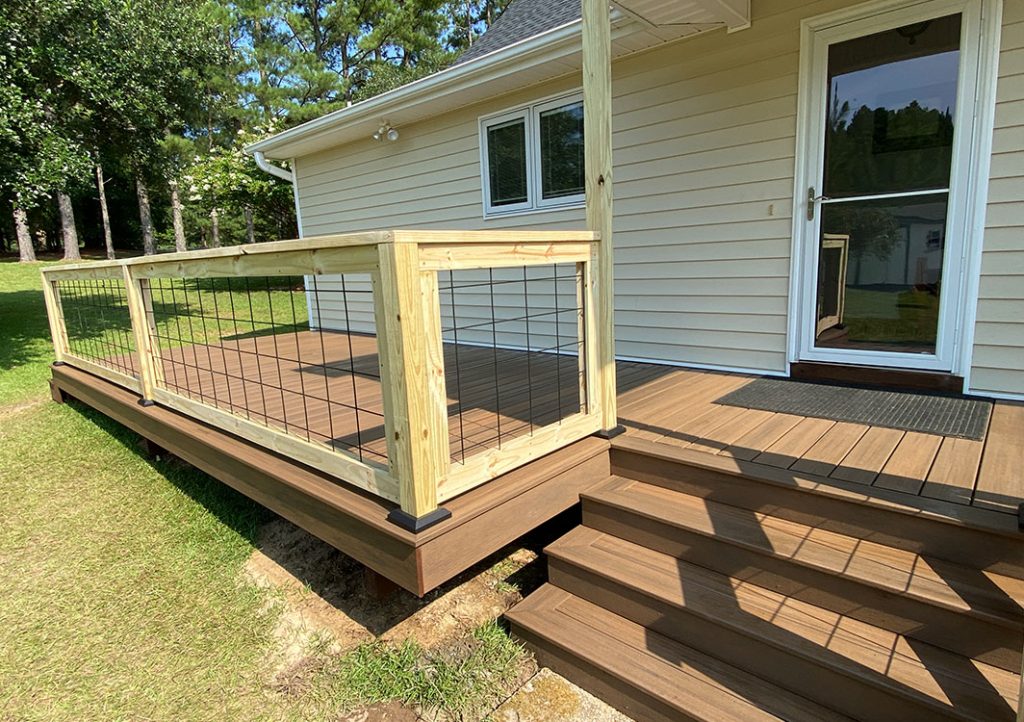
Lumber and wood shortages force homeowners to look at different materials for their decks. One popular material is composite decking. Composite decking materials are a great alternative to wood decking due to their durability, cost, and range of options.
The team at Raynor Shine Construction is here to tell you everything you need to know about composite decking. We will explore composite decking options and talk about how you can make your dream deck for your yard!
Feel free to call us if you have any questions about decking brands and manufacturers. We look forward to hearing from you!
What Is a Composite Deck Board?
Composite decking is an alternative to traditional wood decking and consists of a combination of synthetic and natural elements. Composite decking materials typically consist of a mixture of wood fibers, plastic, plastics, and other additives.
Contractors use two primary types of composite decking:
- Uncapped Composite Wood
- Capped Wood Composite
Both types of decking have a similar composition and use the same materials. The main difference is that capped wood composite features an exterior plastic shell. This shell offers enhanced protection against moisture, mildew, and the elements.
Homeowners favor composite decking because it is cheaper than wood and provides excellent durability and flexibility. Moreover, wood shortages across the globe make composite deck boards a more feasible option for decking.
Composite Vs. Wood Decking Materials

Most decks feature a wooden base for the main structural element. You can then add wood or composite paneling on top. Below are some points of comparison between the two decking materials.
Appearance
Most homeowners prefer genuine wood paneling due to its warm and rustic appearance. Older versions of composite decking lack the luster and body of real wood, but modern composites are more advanced.
New composite materials can mimic the appearance and style of whatever wood you want. Composite materials will also not fade as quickly from UV rays and heat.
Moisture Protection
Composite material typically offers better protection from moisture and mold than wood. Composite paneling has a plastic shell covering the underlying wood materials, sealing it from the elements.
You can treat wood decks to seal out water, but that costs extra time and money. With composite paneling, you get excellent moisture protection immediately.
Maintenance
Composite deck panels are also easier to maintain than wood. You do not need to stain or paint composite decking, and you can wash it with the most common deck cleaning substances. All you need to do is periodically sweep and hose down your deck to keep it looking fresh and new.
Pest Control
One of the best features of composite decking is pest resistance. Composite decking is virtually immune from infestation, unlike wood decks, which can become home to termites, ants, carpenter bees, and beetles. Pests can destroy your wood deck, making composite decking a safe choice to protect your investment.
Pricing
Wood decking can be cheaper to buy and install than composite decking, depending on the demand for wood products in the market. However, composite materials can be more cost-effective in the long run.
Composite decking has low maintenance costs, and you do not need to paint or stain it. It can also last longer than traditional wood.
The Composite Decking We Build With
There are a lot of composite manufacturers, and the boards behind the names vary more than the marketing suggests. We build with TimberTech, in two forms depending on what your yard puts a deck through.
Capped composite is the workhorse. Wood fiber and recycled plastic under a protective shell, in a wide range of colors and grain patterns. TimberTech backs its Legacy, Reserve, Terrain, and Terrain+ lines with a 30-year product, fade, and stain limited warranty, and Prime and Prime+ with 25 years.
Advanced PVC is the step up. These boards contain no wood flour at all, which makes them the right answer over water, around pools, on covered porches, and in the shaded north-facing yards where moisture sits for days after a storm. The Vintage, Landmark, Harvest, and Harvest+ lines carry a limited lifetime product warranty with 50 years of fade and stain coverage behind it.
A few things worth knowing about both:
- Recycled content is high. TimberTech builds its composite with up to 85 percent recycled material and its PVC with up to 65 percent.
- PVC runs cooler. TimberTech rates its Advanced PVC as staying up to 30 degrees cooler underfoot than traditional composite decking, which matters on a west-facing deck in July.
- This is surface material. Composite and PVC boards are decking, not structure. They sit on a frame of pressure-treated lumber, and that frame has to be sound and correctly spaced before any board goes down. Plenty of the composite failures we get called out to look at are really frame failures wearing a nice surface.
We bring physical samples to every estimate, because color reads completely differently against your own siding at four in the afternoon than it does in a photo.
What It Costs to Own
TimberTech sits at the premium end of the composite market, and we do not pretend otherwise.
What you buy for that is a longer warranty, better color retention, and a board you are not thinking about again for decades.
The real numbers depend on size, height, framing condition, and which line you pick. We publish honest ranges in our guide to what a deck costs in this market rather than quoting a per-board figure that falls apart the moment anyone measures your yard.
Where Our Materials Come From
The boards get all the attention, and they are only half of a deck. Everything underneath, framing lumber, joist hangers, post bases, and fasteners, comes to us through professional building supply channels, from suppliers we have used for years and can hold accountable when a pallet arrives wrong.
That is usually the real explanation when two quotes for the same deck land thousands of dollars apart.
The gap is rarely labor. It is the lumber grade, the hardware rating, the fastener metal, and how much of the old structure the other crew planned to leave in place.
How Long Does Composite Decking Last?
One of the best reasons to consider composite decking is its lifespan. A high-quality composite deck can last upwards of 30 years—potentially longer if you frequently wash and sweep it.
Below are some quick tips on extending the lifespan of your composite deck.
- Remove standing water quickly. Composite decking is water-resistant, but standing water can penetrate the inner layers of the material. It is essential to redirect water spouts off your deck.
- Sweep your deck frequently. Granules and debris can settle in board gaps, causing friction and loose panels over time.
- Watch out for harsh chemicals. Caustic substances like bleach can partially dissolve the plastic shell on sealed composite, causing it to lose its luster and protective properties.
- Be mindful of heat sources. Heat from something like a dryer vent can cause the synthetic materials to break down faster than normal.
- Use gentle bristles for scrubbing. Stay away from materials like metal brushes or steel wool, as these can scratch the outer layer and ruin its integrity.
If your composite decking board is having problems, call an expert today for repairs!
Contact a Decking Specialist Today!
At Raynor Shine Construction, we dedicate ourselves to 100% customer satisfaction. We have experience serving North Carolina for several years and helping countless homeowners construct their dream decks. When it comes to your home, don’t settle for subpar service—choose Raynor Shine Construction instead!
Interested in exploring composite decking options? Contact us online and we’ll talk about your deck project!